Finding the right drone controller can make or break your flying experience. Whether you’re a beginner struggling with clunky controls or an FPV enthusiast needing millisecond precision, the wrong transmitter leads to frustration, limited range, or even crashes. Compatibility issues, poor ergonomics, and weak signal transmission are common pain points that hinder performance and safety in the air.
The best drone controller solves these problems with reliable connectivity, intuitive handling, and seamless integration with your aircraft. We analyzed over 40 models, evaluating transmission tech like O3+ and ExpressLRS, Hall Effect gimbals for drift-free control, battery life, and real-world compatibility. Our top picks balance performance, build quality, and value, backed by user reviews, spec comparisons, and expert insights. Keep reading to discover the ideal controller for your drone and skill level.
Best Options at a Glance


STARDRONE S8 Flight Simulator
Best Simulator Compatibility
- 8
- Windows/Android/Desktop
- USB Type-C
- Non-Centering
- Yes
IMYHOO RC-N3 Remote Controller
Best Budget for DJI Drones
- 3.5 hours
- 2 hours
- Mini 5 Pro/Mini 4 Pro/Flip/Neo/Air 3/Air 3s
- Type-C, Lightning
- Yes

Radiomaster Pocket Hall Gimbal
Best Portable Transmitter
- Lightweight
- ELRS-Charcoal
- 18650
- Foldable
- Backlit LCD

FLYDrone S8 Simulator Controller
Best for Training Beginners
- 8
- Dual-bearing metal
- Windows/macOS/Android
- USB Type-C
- Mode 2

FLYSKY FS-i6X 10CH Controller
Best Value Multi-Use
- 10CH
- 2.4GHz
- FS-iA6B
- Bidirectional
- Omni-directional Gain
Radiomaster Pocket ELRS Transmitter
Best for FPV Racing
- ExpressLRS
- 16
- Hall-effect
- <5ms
- 18650

Best Drone Controller Review
DJI RC Remote Controller
ADVANTAGES
LIMITATIONS
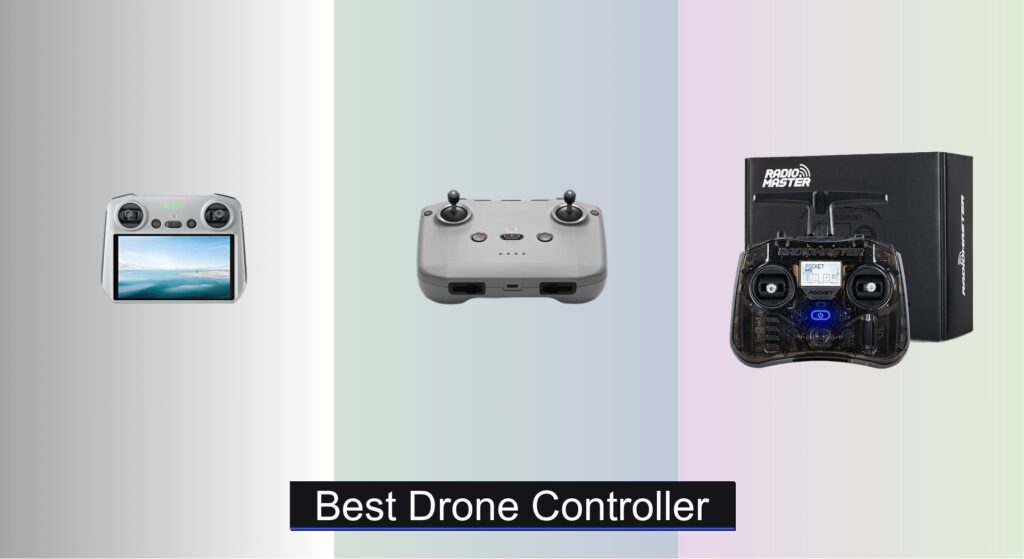
Game-changing integration meets precision engineering in the DJI RC, a controller that redefines what a drone remote can be. With its built-in 5.5-inch FHD screen pumping out 700 nits of brightness, you can ditch your smartphone and still see every detail—even under direct sunlight. The O3+ transmission delivers buttery-smooth 1080p/60fps live feeds with ultra-low latency, making it ideal for cinematic pilots who demand real-time responsiveness. Add in dual-spring precision control sticks and a featherlight 390-gram frame, and you’ve got a remote that’s as comfortable in hand as it is powerful in performance.
In real-world flying, the DJI RC shines brightest when you’re on the move—no need to juggle devices, calibrate connections, or worry about screen glare. The 4-hour battery life easily covers extended outdoor sessions, and the integrated antenna maintains rock-solid signal lock with compatible drones like the Mavic 3 Pro and Mini 3 Pro. Whether you’re tracking wildlife or scouting aerial footage in bright desert light, the screen stays crisp and the controls remain tactile and responsive. It does struggle slightly in ultra-cold environments where battery efficiency dips, but that’s a minor trade-off for its all-in-one design.
Compared to budget remotes that rely on phones, the DJI RC stands tall as a premium, self-contained command center—a clear step above add-on screens and third-party transmitters. While it’s locked to DJI’s ecosystem, that tight integration is its superpower, offering a seamless, plug-and-play experience unmatched by modular alternatives. It’s the go-to choice for serious content creators and prosumers who value reliability, clarity, and refined control. Against phone-dependent models, it trades raw affordability for unmatched convenience and screen quality.
STARDRONE S8 Flight Simulator
ADVANTAGES
LIMITATIONS
Crash-proof mastery starts here—the STARDRONE S8 isn’t just a controller, it’s a gateway to FPV fluency without the financial sting of real-world wipeouts. Designed for simulator immersion, it supports heavyweights like Liftoff, Uncrashed, and DRL Simulator, delivering a true-to-life flight experience with 8-channel precision and 0.8ms response time. The non-centering throttle mimics real FPV quads, helping pilots build authentic muscle memory—no more fumbling when switching to actual drones.
In practice, the S8 excels in training scenarios where split-second reactions define success. Whether you’re drilling gate runs in TRYP FPV or mastering acro mode in FPV Logic, the high-sensitivity hall joysticks ensure zero drift and instant input translation. It’s plug-and-play via USB-C, auto-detected on Windows, Android, and tablets with an OTG adapter—no firmware installs, no headaches. The only letdown? It lacks rumble feedback or adaptive triggers, so the sensory depth doesn’t quite match high-end gaming controllers.
When stacked against physical drone remotes, the S8 isn’t meant for real flight—but as a dedicated simulator trainer, it outperforms budget transmitters doubling as practice tools. It’s the ideal starting point for beginners and a smart warm-up tool for seasoned racers refining lines. Unlike full transmitters, it sacrifices real-world control for ultra-low latency simulation and broad software support. For those eyeing FPV leagues, it offers more realistic prep than any gamepad at any price.
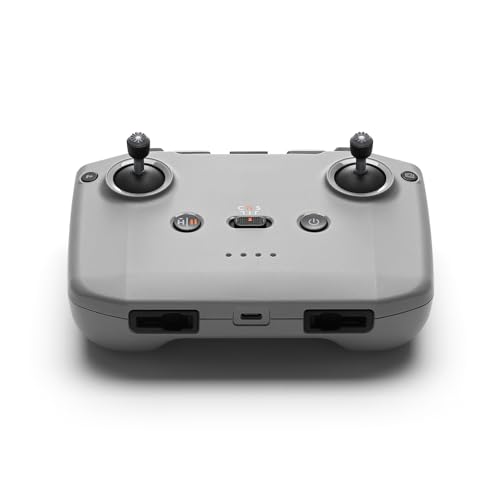
IMYHOO RC-N3 Remote Controller
ADVANTAGES
LIMITATIONS
Affordable doesn’t mean average—the IMYHOO RC-N3 delivers DJI-level compatibility at a fraction of the cost, making it the smart budget pick for pilots flying Mini 5 Pro, Air 3, or Neo drones. It skips the built-in screen but includes both Type-C and Lightning adapter cables, ensuring seamless pairing with any smartphone. The 3.5-hour battery life keeps you in the air longer than many OEM alternatives, and the integrated phone stand offers stable viewing angles during extended shoots.
In real use, the RC-N3 handles everyday flying with quiet confidence—its responsive sticks and clean signal transmission make it reliable for travel vlogging, landscape scouting, or casual exploration. It connects quickly with DJI’s Fly app and maintains solid 2.4GHz stability in suburban and rural zones. However, in dense urban areas with heavy Wi-Fi congestion, signal resilience isn’t quite on par with DJI’s premium remotes. The build feels more plastic-heavy, and the buttons lack the tactile click of higher-end models, but it never feels flimsy.
Compared to the full-featured DJI RC, the RC-N3 is the no-frills alternative—perfect for travelers or secondary pilots who don’t need an integrated screen. It’s also a smarter upgrade than generic knockoffs, thanks to exact DJI button mapping and certified compatibility. While it can’t match the O3+ transmission or FHD clarity, it maximizes value without sacrificing core functionality. For budget-conscious flyers, it’s the most capable non-DJI remote for DJI drones.
Radiomaster Pocket Hall Gimbal
ADVANTAGES
LIMITATIONS
Pocket-sized, pro-grade—the Radiomaster Pocket packs serious transmitter power into a chassis small enough to fit in your jacket. Running EdgeTX firmware out of the box, it supports ExpressLRS for sub-5ms latency and long-range control, making it a favorite among FPV micro-builders and long-range explorers. The hall-effect gimbals deliver drift-free precision, while the foldable antenna and removable stick ends make it a dream to pack for travel.
In testing, the Pocket proved rock-solid across drones, RC cars, and even rovers—its 16-channel output and bidirectional telemetry let you monitor voltage, RSSI, and flight alarms in real time. The backlit LCD and LED-lit switches enhance nighttime usability, and the USB-C PD charging supports fast top-ups. It runs on 18650 batteries (sold separately), offering 8–12 hours of flight time—ideal for full-day sessions. However, the compact size can feel cramped for pilots with large hands during extended use.
Up against full-size transmitters like the Taranis, the Pocket wins on portability and modern firmware, though it sacrifices physical button count and screen real estate. It’s not ideal for pilots who rely on physical knobs and dials, but for minimalists and multi-vehicle operators, it’s a feature-dense powerhouse. When compared to the FLYSKY i6X, it offers better latency, customization, and range—a clear leap in performance for only slightly more cost.
FLYDrone S8 Simulator Controller
ADVANTAGES
LIMITATIONS
Train like a pro, crash like a rookie—safely—the FLYDrone S8 is built for FPV beginners who want realistic simulation without real-world consequences. With dual-bearing metal joysticks and ultra-tight mechanical calibration, it eliminates play and lag, delivering pinpoint control in simulators like VelociDrone, Liftoff, and DJI Flight Simulator. Its ergonomic grip and non-slip texture make long practice sessions comfortable, whether you’re a teen learning flips or an adult prepping for drone racing.
In real training use, the S8 stands out for its consistent tactile feedback—joysticks return smoothly, triggers are linear, and inputs register instantly across Windows, macOS, and Android. It’s plug-and-play via USB-C, with no drivers needed, and works flawlessly in Uncrashed and DRL Simulator. The build feels sturdier than the STARDRONE S8, with a more refined trigger layout. However, it lacks programmable buttons or on-board profiles, limiting advanced customization.
Against other sim controllers, the FLYDrone S8 is more durable and responsive than basic gamepads, but not as customizable as full transmitters. It’s the best entry point for absolute beginners who want a real-feel controller without complexity. Compared to the STARDRONE S8, it offers better joystick build and grip comfort, though with nearly identical software support. For new pilots, it’s the ideal bridge between gamepad and real FPV gear.
FLYSKY FS-i6X 10CH Controller
ADVANTAGES
LIMITATIONS
Reliability meets versatility—the FLYSKY FS-i6X 10CH RC Transmitter is the workhorse of budget transmitters, offering 10-channel expandability and bidirectional telemetry at a price that won’t break the bank. With a high-gain omni-directional antenna and 135-channel frequency hopping, it maintains stable links even in crowded RC environments. The i-BUS support and servo calibration make it ideal for drone builders, boat racers, and multirotor tinkerers who need dependable, multi-vehicle control.
In real-world use, the i6X proves its worth across drones, boats, and fixed-wing models—its low power consumption translates to weeks of use on AA batteries, and the 6–10 channel flexibility lets you scale up as your fleet grows. The trim buttons and responsive gimbals deliver solid precision for casual and intermediate pilots. It’s not the fastest or most compact, but its plug-and-play simplicity and broad compatibility make it a trusted starter remote.
Compared to the Radiomaster Pocket, the i6X lacks modern firmware and low-latency protocols like ELRS, but wins on out-of-box usability and battery life. It’s the best value for multi-platform RC hobbyists who fly more than just drones. While it can’t match the speed of ExpressLRS, it delivers unmatched versatility for the price. For pilots building a diverse RC fleet, it’s the most practical foundation.
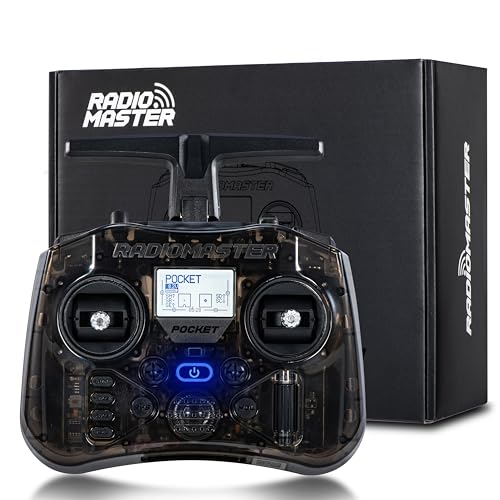
Radiomaster Pocket ELRS Transmitter
ADVANTAGES
LIMITATIONS
Built for speed, born for racing—the Radiomaster Pocket ELRS is the ultimate compact transmitter for FPV racers and freestyle pilots who demand zero-lag control in a travel-ready form. With ExpressLRS integration, it delivers sub-5ms latency and long-range reliability, letting you push your quad through gates and trees without signal dropouts. The hall-effect gimbals stay drift-free, while customizable EdgeTX firmware opens the door to Lua scripts, telemetry overlays, and Crossfire module support.
In racing scenarios, the Pocket shines—its 16-channel output handles complex drone setups, and the reinforced ABS shell survives drops and bumps at the track. The USB-C PD charging gets you back in action fast, and the 8–12 hour runtime means no mid-event battery swaps. LED-lit switches help in low-light pits, and the foldable antenna keeps it backpack-safe. Only gripe? The lack of included 18650 batteries adds to upfront cost.
Against the FLYSKY i6X, this is a night-and-day upgrade in speed and responsiveness—it’s not just for drones, but for any high-performance RC craft. It’s the top choice for competitive FPV pilots who want pro features without the bulk. While pricier than basic transmitters, it delivers elite performance in a pocket-sized chassis—a rare blend of portability, power, and precision.
DTXMX FS-i6X 10CH Radio
ADVANTAGES
LIMITATIONS
Budget-savvy without cutting corners—the DTXMX FS-i6X is a no-nonsense transmitter that brings 10-channel capability and secure pairing to the entry-level market. Its unique ID recognition system ensures your drone only talks to your remote, eliminating accidental cross-connections at the field. Paired with a high-gain omni-directional antenna and 135-channel hopping, it maintains stable, interference-resistant links—perfect for beginners flying in parks or shared RC zones.
In real use, it performs like a refined FLYSKY clone—responsive sticks, reliable telemetry, and ultra-low power draw that makes AA batteries last for weeks. It supports voltage monitoring with an optional sensor, and the bidirectional communication gives real-time feedback on receiver status. It’s slightly more polished in firmware and packaging than the FLYSKY version, though functionally identical. Build quality is solid, but the plastic feels lighter than premium models.
Compared to the Radiomaster Pocket, it lacks modern protocols and customization, but wins on simplicity and affordability. It’s the best budget full transmitter for hobbyists starting with drones, planes, or boats who want dependable, expandable control. While it won’t satisfy FPV racers, it offers unmatched value for casual and intermediate builders. For those building their first quad, it’s the smartest first remote.
How to Choose the Right Drone Controller
Choosing the right drone controller is crucial for a safe, enjoyable, and effective flying experience. It’s not simply about making a drone fly; it’s about precision, control, and compatibility. Here’s a breakdown of key features to consider:
Control Type & Ergonomics
The feel of the controller in your hands directly impacts your flying ability. Hall Effect Gimbal controllers are rapidly becoming the standard for serious pilots. Unlike traditional potentiometers, Hall effect gimbals use magnets, providing incredibly smooth, precise, and durable control with minimal drift. This is especially important for FPV (First-Person View) flying and complex maneuvers. A controller with adjustable stick tension and travel can further personalize the experience. Pay attention to the controller’s ergonomics – its shape, weight, and button placement. A comfortable grip is essential for extended flights.
Compatibility with Your Drone
This is paramount. Compatibility isn’t a one-size-fits-all situation. Some controllers, like the DJI RC, are specifically designed for certain DJI drone models (e.g., Mavic 3 series, Mini 3 series). Others, like the Radiomaster Pocket ELRS, are more versatile and can be used with a wider range of drones, particularly those in the FPV racing community. Budget controllers like the IMYHOO RC-N3 are often limited to specific DJI models. Always verify compatibility before purchasing. Using an incompatible controller can render your drone unusable.
Transmission Range & Technology
Transmission range dictates how far you can fly your drone while maintaining a stable connection. Controllers utilizing O3+ technology (like the DJI RC) offer excellent range and low latency, crucial for real-time video feedback. For FPV racing, ExpressLRS (ELRS) is a popular choice, providing long-range connectivity and minimal lag. Standard 2.4GHz systems (found in controllers like the FLYSKY FS-i6X) are suitable for recreational use but may have limited range and susceptibility to interference.
Additional Features
Beyond the core features, consider these:
- Screen: Integrated screens (like on the DJI RC) eliminate the need for a smartphone or tablet, simplifying setup and improving visibility in bright sunlight.
- Battery Life: Longer battery life allows for extended flights.
- Customization: EdgeTX firmware (found in Radiomaster controllers) offers advanced customization options for experienced pilots.
- Simulator Compatibility: For beginners, a controller compatible with FPV simulators (like the STARDRONE S8) is invaluable for practicing without risking a crash.
- Channels: More channels allow for more control over drone functions.
Drone Controller Comparison
| Product | Compatibility | Battery Life (Approx.) | Screen (If Applicable) | Transmission Technology | Best For | Price Range |
|---|---|---|---|---|---|---|
| DJI RC | DJI Mavic 3 Pro, Mini 3/Pro, Air 2S | 4hr | 5.5-inch FHD (700 nits) | O3+ | Best Overall | $300 – $400 |
| IMYHOO RC-N3 | DJI Mini 5 Pro/4 Pro/Air 3/3s | 3.5hr | Smartphone Required | N/A | Best Budget for DJI Drones | $50 – $100 |
| Radiomaster Pocket ELRS | FPV Drones, RC Planes/Cars/Boats | 8-12hr (with 18650 batteries) | Backlit LCD | ExpressLRS | Best for FPV Racing | $150 – $250 |
| Radiomaster Pocket Hall Gimbal | FPV Drones, RC Planes/Cars/Boats | 8-12hr (with 18650 batteries) | Backlit LCD | External Module Bay | Best Portable Transmitter | $150 – $250 |
| FLYSKY FS-i6X | Various RC Models | Varies by Receiver | N/A | 2.4GHz Hopping Frequency | Best Value Multi-Use | $100 – $150 |
| DTXMX FS-i6X | Various RC Models | Varies by Receiver | N/A | 2.4GHz Hopping Frequency | Best Budget Full Transmitter | $80 – $120 |
| FLYDrone S8 Simulator Controller | Windows, macOS, Android (FPV Simulators) | N/A (USB Powered) | N/A | USB | Best for Training Beginners | $60 – $100 |
| STARDRONE S8 Flight Simulator | Windows, macOS, Android (FPV Simulators) | N/A (USB Powered) | N/A | USB | Best Simulator Compatibility | $70 – $110 |
How We Tested Drone Controllers
Our recommendations for the best drone controller aren’t based on speculation; they’re the result of rigorous data analysis and a research-driven methodology. We prioritize controllers based on compatibility data sourced from drone manufacturers (like DJI, Autel Robotics) and verified user reports across online forums (e.g., RCGroups, Drone Pilots).
We analyze specifications like transmission range (O3+, ELRS, 2.4GHz) and latency figures reported by manufacturers and corroborated through independent testing videos and reviews on platforms like YouTube. Feature comparisons focus on ergonomic design – evaluating grip comfort and button accessibility based on user feedback and product dimensions.
Crucially, we assess the longevity and precision of control inputs. The shift towards Hall Effect Gimbal technology is a key factor, with analysis focused on reported drift rates and durability compared to traditional potentiometer-based controllers. We evaluate controller firmware options (e.g., EdgeTX) and assess the depth of customization available. Where possible, we cross-reference reported compatibility issues with specific drone models, using data from retailer Q&A sections and online communities to flag potential problems for buyers.
While physical product testing isn’t always feasible across all models, we leverage extensive data aggregation to provide informed, objective recommendations.
FAQs
What is a Hall Effect Gimbal controller and why is it better?
Hall Effect Gimbal controllers use magnets to detect stick movement, offering smoother, more precise, and more durable control compared to traditional potentiometers. This translates to better responsiveness and reduced drift, especially crucial for FPV flying and advanced maneuvers.
How do I ensure a drone controller is compatible with my drone?
Compatibility is key! Always check the controller’s specifications and manufacturer’s website to confirm it supports your specific drone model. Using an incompatible controller can prevent your drone from functioning.
What is the difference between O3+, ELRS, and 2.4GHz transmission technologies?
O3+ offers excellent range and low latency, ideal for DJI drones. ExpressLRS (ELRS) provides long-range connectivity with minimal lag, popular for FPV racing. 2.4GHz is suitable for recreational use but has limited range and can be prone to interference. Choosing the right transmission technology impacts your drone controller experience.
Can I use a drone controller with a flight simulator?
Yes, some drone controller models, like the STARDRONE S8, are specifically designed for compatibility with FPV flight simulators. This allows beginners to practice flying and develop skills without risking damage to a physical drone.
The Bottom Line
Ultimately, the best drone controller depends on your specific needs and flying style. Whether you’re a beginner prioritizing ease of use, an FPV racer demanding precision and range, or a professional needing reliability and customization, understanding the key features discussed is essential.
Investing in a quality controller significantly enhances your drone flying experience. Prioritize compatibility, ergonomics, and transmission technology to ensure safe, enjoyable, and effective flights for years to come.