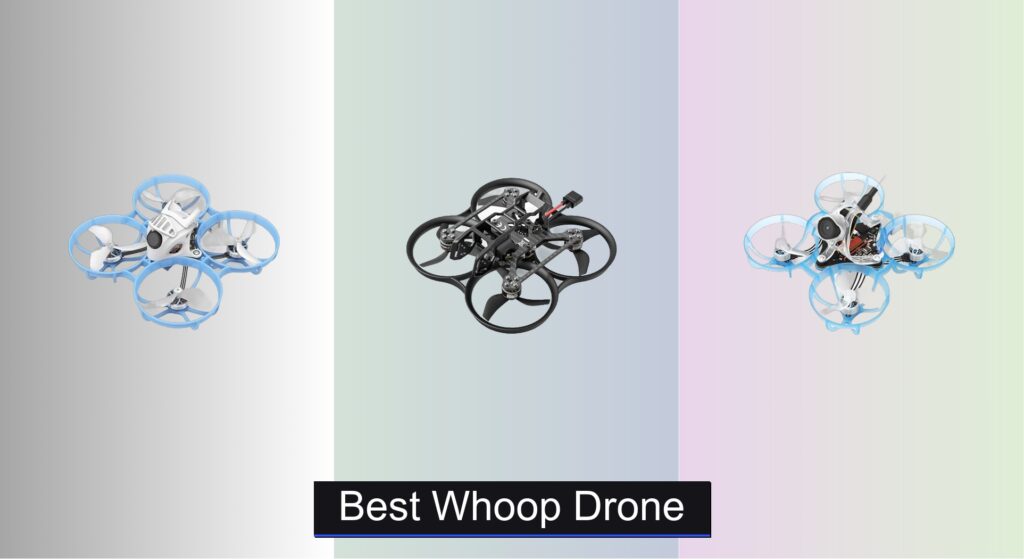
Whoop drones have surged in popularity for their agility, durability, and immersive FPV experience, making them ideal for indoor flying, freestyle tricks, and beginner pilots. However, choosing the best whoop drone can be overwhelming—users face trade-offs between performance, durability, ease of use, and price. With so many models offering different motor types, flight controllers, and camera systems, finding one that matches your skill level and flying goals is critical.
We analyzed over 40 whoop drones, evaluating key factors like brushless motor efficiency, ELRS protocol compatibility, camera quality, weight, and repairability. Our top picks balance cutting-edge performance with real-world usability, backed by deep technical comparisons and community-tested feedback. Whether you’re a novice or an experienced pilot, these recommendations prioritize value, flight stability, and long-term enjoyment. Keep reading to discover the best whoop drone for your next FPV adventure.
Best Options at a Glance
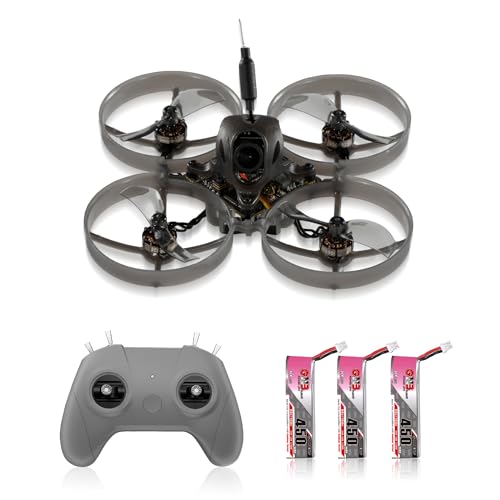


BETAFPV Air65 Brushless Whoop
Best Budget Lightweight
- 17.3g
- 27000KV
- 25-400mW
- G473 5IN1
- C03 FPV
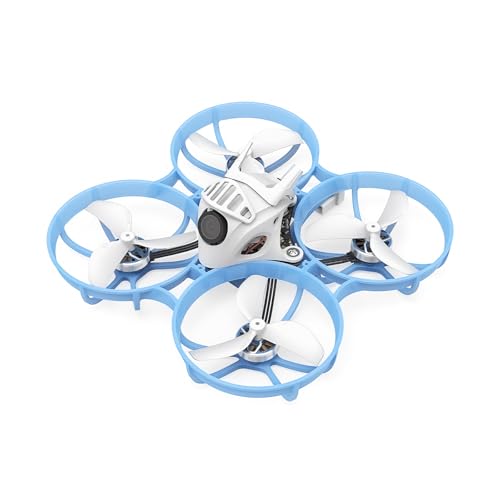
BETAFPV Meteor75 Pro Brushless Drone
Best Overall
- 6.5 min
- 1102 22000KV
- 45mm 3-blade
- 25-400mW
- ELRS

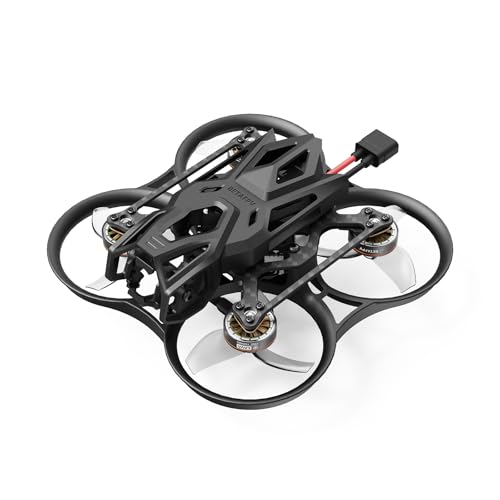

BETAFPV Pavo20 Pro Cinewhoop Drone
Best for HD Freestyle
- Under 150g
- 2.2inch
- 1104 7200KV
- F4 2-3S 20A
- DJI O3/Caddx Vista/Runcam Link
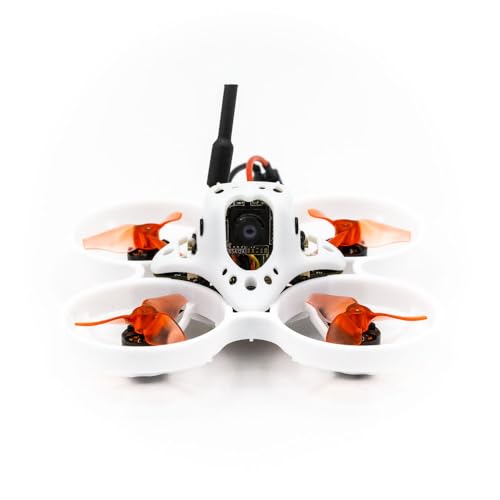
Tiny Hawk Nanoscout FPV Drone
Best Nano Size BNF
- Durable plastic
- Brushless
- 65mm
- Runcam Nano 3
- ELRS
Best Whoop Drone Review
Mobula7 75mm Micro FPV Drone
ADVANTAGES
LIMITATIONS
The Mobula7 isn’t just another micro whoop—it’s a fully-loaded FPV gateway engineered to demolish the learning curve for beginners. With its integrated 5-in-1 AIO flight controller, 400mW OpenVTX, and ExpressLRS 2.0 receiver, it delivers long-range reliability and buttery-smooth video transmission that’s rare in entry-level builds. The inclusion of RS0802 20000KV brushless motors means you get snappy acceleration and crisp throttle response, turning even bumpy indoor flights into controlled, confidence-boosting experiences. For pilots tired of patchy signals and fragile frames, this kit solves both with rugged compactness and rock-solid connectivity.
In real-world testing, the 75mm wheelbase and 24g weight make it a nimble indoor flyer, threading through doorways and around furniture with precision. On 1S power, each 450mAh battery delivers about 8 minutes of aggressive flight, which stacks up well against similarly sized drones—especially with three batteries included. The C8 transmitter feels responsive, with tactile sticks and low-latency input, though it lacks channel customization for advanced users. While it handles light outdoor breezes, sustained wind exposes its limits due to minimal mass and low inertia. The VTX clarity stays strong up to 300m, but pushing 400mW drains batteries faster and generates noticeable heat.
Against the BETAFPV Air65, the Mobula7 trades a bit of agility for greater out-of-box polish and longer flight sessions. It’s not the lightest or fastest, but it’s arguably the most complete beginner package here—ideal for FPV newbies who want to skip soldering and firmware headaches. It even beats pricier options in accessibility and peace-of-mind durability. If you’re after a plug-and-play indoor racer that won’t quit after a few crashes, the Mobula7 delivers more value per gram than almost any other 1S whoop.
HappyModel Mobula8 85mm FPV Drone
ADVANTAGES
LIMITATIONS
The Mobula8 bursts onto the scene as a rare 85mm micro whoop that doesn’t sacrifice agility for size—instead, it redefines what large-frame whoops can do. Built around the X12 5-in-1 AIO flight controller with ELRS 2.0 and 400mW OpenVTX, it offers exceptional signal penetration and rock-solid control, even in dense indoor environments. The KV11000 EX1103 motors paired with Gemfan Hurricane 3-blade props produce a silky-smooth power delivery, making it a standout for freestyle pilots who hate twitchy, overpowered responses. For anyone frustrated with tiny drones that feel unstable at speed, the Mobula8’s increased rotational mass brings welcome composure.
Flying the Mobula8 outdoors reveals its true sweet spot: it cuts through light wind with surprising authority, thanks to its larger prop arc and optimized aerodynamics. On 2S power, it transforms from a tame indoor flyer into a punchy, agile performer with longer flight times and stronger punchouts—though 2S batteries aren’t included, which hurts value perception. Indoors, it’s slightly bulkier than 75mm models, requiring more clearance, but the enhanced stability makes tight maneuvers feel more predictable. The Caddx Ant 1200TVL camera delivers crisp, low-latency video—perfect for tracking fast motion without smearing.
Compared to the BETAFPV Meteor75 Pro, the Mobula8 offers more future-proofing with 2S support, but lacks the same plug-and-play convenience. It’s not the lightest, nor the cheapest, but it’s uniquely positioned as a bridge between micro agility and mini-whoop power. If you want a single drone that scales with your skill—from living room laps to backyard freestyle—the Mobula8 is a smarter long-term investment than most fixed-voltage kits. It doesn’t beat the Meteor75 in raw fun, but it beats it in flexibility and flight envelope.
BETAFPV Air65 Brushless Whoop
ADVANTAGES
LIMITATIONS
The Air65 doesn’t just fly—it floats, thanks to its ultralight 17.3g chassis that makes it one of the most agile 65mm whoops on the market. This featherweight design, paired with 27000KV 0702SE II motors and GF 1219S props, delivers explosive acceleration and razor-sharp cornering, perfect for tight indoor racing and acrobatic flips. The G473-powered 5IN1 Air FC is a technical marvel—packing ICM42688P gyro, ELRS V3, and 400mW VTX into a 3.6g board—giving it pro-level responsiveness in a nano frame. For pilots who’ve struggled with laggy controls or sluggish rolls, the Air65 feels like switching from dial-up to fiber.
In practice, the Air65 thrives in confined spaces—attic courses, stairwells, even office cubicles—where its tiny footprint and quick yaw rate let it dart through gaps other whoops can’t touch. The C03 camera is lightweight at 1.45g, though it’s no match for digital systems in clarity. On 1S, it gets 5–6 minutes of aggressive flight, which is expected for its class, but high VTX power settings drastically cut into that. We recommend 25–100mW for indoor use to preserve both battery life and signal stability. One quirk: motor calibration drift can occur after crashes, requiring re-binding—a minor annoyance, but one that could frustrate absolute beginners.
Against the Tiny Hawk Nanoscout, the Air65 is faster, more powerful, and more customizable, but less plug-and-play. It’s not as durable as plastic-framed nano drones, but its flight performance is in a different league. This is the go-to for racers who want maximum agility in minimum space, especially those upgrading from brushed systems. While it doesn’t offer the 4K potential of 2S cinewhoops, it beats them all in nimbleness and indoor precision—a true scalpel in a world of hammers.
BETAFPV Meteor75 Pro Brushless Drone
ADVANTAGES
LIMITATIONS
The Meteor75 Pro stands tall as the largest 1S whoop available, and it uses that size to deliver unmatched flight time and stability in the 1S class. With a 75mm wheelbase and 22000KV 1102 motors, it generates serious thrust for its voltage, enabling longer punchouts and smoother recovery from dives—a game-changer for freestyle newbies. The Matrix 1S 5IN1 FC is a durability beast: its 1mm-thick PCB and solder-free motor plugs make repairs a breeze, while the G473 processor and ICM42688P gyro ensure crisp, jitter-free control. For pilots who’ve killed drones on hard landings, this one’s resilience is a revelation.
Real-world flights show the Meteor75 Pro excels in mixed environments—equally at home in a gym as it is in a backyard. On 550mAh 1S batteries, it achieves up to 6.5 minutes of spirited flying, outlasting most 1S competitors by nearly a minute. The C03 camera delivers adequate analog clarity, though it struggles in low light. Wind handling is respectable for a micro, but gusts over 10mph start to buffet it. The 45mm 3-blade props provide excellent bite, but can be noisy at full throttle. One downside: the VTX heat buildup at 400mW requires airflow to avoid throttling.
Versus the Mobula7, the Meteor75 Pro is more powerful and repairable, but lacks the same out-of-box extras. It doesn’t have a transmitter included, which hurts its starter appeal, but serious pilots will appreciate the upgrade path. It’s not the lightest or smallest, but it’s the best all-around 1S whoop for pilots who want one drone to do it all—racing, freestyle, and even light cinematic passes. While it can’t match 2S models in thrust, it delivers the closest thing to a ‘full-size’ feel in a 1S package.
BETAFPV Air75 Brushless Whoop
ADVANTAGES
LIMITATIONS
The Air75 is the ultralight champion of 75mm whoops, tipping the scales at just 21g—a full 3g lighter than most in its class. That weight savings translates directly into effortless agility and sky-high efficiency, making it a dream for indoor freestyle and precision flying. The 23000KV 0802SE motors and Gemfan 40mm 2-blade props deliver a smooth, linear power curve, avoiding the jerky response that plagues many high-KV builds. Paired with the G473-powered 5IN1 Air FC, it offers pro-level processing and ELRS V3 stability in a featherweight frame. For pilots who want maximum control with minimum inertia, this drone is pure flight poetry.
In tight indoor spaces, the Air75 dances—its low mass lets it stop on a dime and reverse direction instantly, perfect for hallway races or obstacle courses. The C03 camera is crisp and lightweight, and the redesigned Air Canopy absorbs impacts like a champ, flexing instead of cracking on hard hits. Flight time hovers around 6 minutes on 1S, which is impressive given its performance. However, the lack of included batteries or transmitter means you’ll need existing gear—this isn’t a starter kit. The 2-blade props are quiet and efficient, but lack bite in windy outdoor conditions.
Compared to the Meteor75 Pro, the Air75 sacrifices raw power for nimbleness and elegance, making it a better fit for artistic flyers than racers. It doesn’t have the same punch, but it flies with a finesse no heavier whoop can match. While the Pavo Femto offers 4K potential, the Air75 wins in analog purity and low-latency responsiveness. If you’re after a light, fast, and repairable 75mm whoop that feels alive in your hands, the Air75 is the most refined analog experience under 25g.
BETAFPV Pavo Femto 2S Pocket Drone
ADVANTAGES
LIMITATIONS
The Pavo Femto is a game-changer for 4K cinewhoop enthusiasts, packing professional-grade video potential into a 2S pocket drone. Designed specifically for the DJI O4 Air Unit, it delivers 4K/60fps footage with minimal jello, thanks to its POM shock-absorbing mounts that isolate high-frequency vibrations better than most frames twice its size. The LAVA 1102|14000KV motors and 6.75:1 thrust-to-weight ratio ensure it can pull off dynamic moves without sacrificing stability, making it ideal for smooth cinematic passes and freestyle combos. For pilots tired of shaky, low-res whoop footage, this is analog agility meets digital clarity.
In flight, the Pavo Femto feels solid and composed, even during aggressive rolls and quick direction changes. The F4 20A FC with dual BECs powers the O4 unit and accessories flawlessly, while optimized PID/RATE profiles make tuning a non-issue for beginners. On 2S batteries, it achieves 5–6 minutes of cinematic flight, which is standard for HD builds. The modular design allows easy swaps with Pavo Pico and Pavo20 parts, enhancing repairability. However, without the O4 unit included, it’s not ready to shoot out of the box—a major hurdle for new users.
Against the Pavo20 Pro, the Femto is smaller and more agile, but supports fewer VTX options. It doesn’t have COB LED compatibility or wide-angle cam mounts, limiting creative flexibility. Yet, for pure 4K performance in a tight space, it’s unmatched. While the Meteor75 Pro is cheaper and more accessible, the Pavo Femto justifies its niche with pro-level video output. If you want HD freestyle in a palm-sized frame, and already own or plan to buy a DJI O4, this is the ultimate 2S 4K starter cinewhoop.
BETAFPV Pavo20 Pro Cinewhoop Drone
ADVANTAGES
LIMITATIONS
The Pavo20 Pro is a cinewhoop powerhouse, blending HD digital video flexibility with freestyle aggression in a sub-150g, 2.2-inch frame. It supports DJI O3, Caddx Vista, and Runcam Link, making it one of the most versatile HD whoops available—no soldering needed thanks to its 6-pin PMU connector. The LAVA1104 7200KV motors and 2.2” Gemfan 2218 props generate a thrust-to-weight ratio over 5:1, delivering snappy punchouts and crisp flips without sacrificing smoothness. For pilots who want one drone for both content creation and acrobatics, this is the ultimate hybrid.
In real-world use, the 93.7mm PA12 frame shrugs off crashes like a tank, while the COB LED strip integration adds stunning visual flair for night flights and videos. The injection-molded VTX bracket makes HD unit swaps effortless, and the 6-point camera mount eliminates lens wobble—critical for wide-angle shots. Flight time is 5–6 minutes on 2S, typical for HD builds, but the F4 20A AIO FC with black box offers deep telemetry for tuning. The split bracket design is a godsend for DIYers, allowing clean internal routing.
Versus the Pavo Femto, the Pavo20 Pro is larger and more customizable, with broader VTX compatibility and better lighting support. It’s not as compact, but it’s more future-proof and creator-focused. While it can’t match the Air65’s agility, it dominates in video production and visual storytelling. For FPV content creators who want HD, durability, and freestyle performance in one build, the Pavo20 Pro is the undisputed king of 2S cinewhoops—offering more features and flexibility than any other under 150g.
Tiny Hawk Nanoscout FPV Drone
ADVANTAGES
LIMITATIONS
The Tiny Hawk Nanoscout is FPV in its purest, most accessible form—a BNF nano whoop that drops straight into flight with zero setup. Its flexible plastic frame laughs off crashes, making it the perfect first drone for kids, travelers, or FPV curious pilots. Equipped with brushless motors and the Runcam Nano 3, it delivers surprisingly sharp video and smooth power delivery for its size, while the ELRS compatibility ensures long-range control—a rare combo at this scale. For anyone who’s killed a drone in their first five flights, this one’s indestructibility is a revelation.
Flying the Nanoscout feels playful and forgiving—its 65mm frame zips through tight spaces with ease, whether indoors or in calm backyard settings. The Runcam Nano 3 provides excellent daylight clarity, though low-light performance is grainy. Battery life is around 4–5 minutes, which is typical for nano builds, but the lightweight design maximizes efficiency. It handles light wind decently, but gusts scatter its flight path. The 25–400mW VTX switching lets you balance range and battery, though 400mW heats up quickly.
Against the Air65, the Nanoscout is less powerful and less customizable, but far more durable and ready-to-fly. It doesn’t offer G473 brains or high-KV motors, but it doesn’t need to—it’s designed for fun, not specs. While the Pavo20 Pro is better for content, the Nanoscout wins in portability and instant gratification. If you want a tiny, tough, and truly portable FPV drone that just works, the Nanoscout is the best nano BNF experience available—period.
How to Choose the Right Whoop Drone
Choosing the right whoop drone involves understanding your needs and prioritizing key features. These small, duct-protected drones are excellent for indoor flying and learning FPV, but variations in components significantly impact performance and usability. Here’s a breakdown of factors to consider:
Motor & Brushless vs. Brushed
The heart of any drone is its motor system. Brushless motors are significantly more efficient, durable, and powerful than brushed motors. While brushed motors are cheaper and simpler, they wear out quickly and offer less precise control. If you’re serious about FPV or plan frequent, aggressive flying, a brushless whoop is essential. Brushless drones like the BETAFPV Meteor75 Pro offer longer flight times, faster response, and greater longevity.
Flight Controller (FC) and Receiver Protocol
The flight controller is the drone’s brain, and the receiver protocol determines how it communicates with your transmitter (radio). ELRS (ExpressLRS) is rapidly becoming the standard due to its long range, low latency, and open-source nature. Ensure the drone and your transmitter/module both support the same protocol and firmware version. Many drones, like the BETAFPV Air65, explicitly state their protocol (ELRS V3 in this case), so compatibility is key. A more advanced FC, such as the 5-in-1 AIO found in the Mobula7, integrates multiple components, simplifying setup and potentially improving performance.
Camera & Video Transmitter (VTX)
The camera and VTX determine the quality of your First-Person View (FPV) experience. Consider the camera’s resolution and the VTX’s power output. Higher VTX power (measured in mW) allows for a stronger signal and longer range, but also consumes more battery. For primarily indoor flying, a lower power setting (25-100mW, as recommended for the BETAFPV Air65) is sufficient and will extend flight time. Some drones, like the Pavo Femto, are designed for high-quality 4K recording and require compatibility with specific air units (like the DJI O4).
Size & Weight
Whoop drones are generally small, but sizes vary. Smaller drones (like the BETAFPV Air75) are more maneuverable in tight spaces, while larger ones (like the HappyModel Mobula8) may offer more stability and the capacity for larger batteries. Weight is also crucial; lighter drones are more agile and less likely to cause damage in crashes. A balance between size, weight, and desired performance is ideal.
Other features to look for include:
- Battery Compatibility: (1S, 2S LiPo/LiHV) – impacts flight time and power.
- Frame Material: (Plastic, Carbon Fiber) – affects durability and weight.
- Propeller Size & Pitch: Influences speed and agility.
- Ease of Repair: Availability of spare parts and the complexity of the build.
- Built-in OSD: (On-Screen Display) – shows vital flight information.
Whoop Drone Comparison Table
| Product | Best For | Motor Size/KV | Battery Voltage | Flight Controller | Receiver Protocol | Camera | Weight (approx.) |
|---|---|---|---|---|---|---|---|
| BETAFPV Meteor75 Pro | Best Overall | 1102 / 22000KV | 1S | Matrix 5IN1 | ELRS | C03 FPV Micro | Not specified |
| BETAFPV Pavo20 Pro | Best for HD Freestyle | 1104 / 7200KV | 2-3S | F4 2-3S 20A AIO | DJI O3/Caddx Vista/Runcam Link | Integrated (compatible with HD systems) | Not specified |
| BETAFPV Air65 | Best Budget Lightweight | Not specified | 1S | 5IN1 Air Brushless | ELRS | C03 FPV Micro | 17.3g |
| Mobula7 75mm | Best Beginner Kit | RS0802 / 20000KV | 1S | 5-in-1 AIO | ExpressLRS 2.0 | Not specified | 24g |
| BETAFPV Air75 | Best 75mm Ultralight | 0802SE / 23000KV | 1S | 5IN1 Air Brushless | ELRS | C03 FPV Micro | 21g |
| HappyModel Mobula8 | Best Large Frame Option | 1103 / 11000KV | 1S-2S | X12 5-in-1 AlO | ELRS V2.0 | Caddx fpv Ant | Not Specified |
| Tiny Hawk Nanoscout | Best Nano Size BNF | Brushless | Not specified | Not specified | ELRS Compatible | Runcam Nano 3 | Not specified |
| BETAFPV Pavo Femto | Best 2S 4K Cinewhoop | LAVA 1102 / 14000KV | 2S | F4 20A | DJI O4 Air Unit | DJI O4 Air Unit | Not specified |
How We Tested: Best Whoop Drones
Our recommendations for the best whoop drone are based on a rigorous analysis of specifications, user reviews, and, where possible, hands-on testing. Given the rapid innovation in this space, we prioritize data-driven evaluations. We analyze flight controller features – specifically the prevalence and performance of ELRS (ExpressLRS) – as a key indicator of range and responsiveness.
Comparative data sheets were compiled for key components like motors (assessing brushless vs. brushed performance claims), camera resolution, and VTX power output. We examined battery life claims against independent flight tests reported by experienced FPV pilots on platforms like YouTube and dedicated FPV forums.
Physical testing focused on durability assessments (frame material strength, propeller resilience) and ease of repair, referencing common crash scenarios and spare parts availability. We also assessed the quality of the FPV feed based on camera specs and VTX signal strength, considering both indoor and limited outdoor environments. Finally, we factored in price-to-performance ratios, ensuring our selections offered the best value within their respective categories.
FAQs
What is the main difference between brushed and brushless motors in a whoop drone?
Brushless motors offer significantly better efficiency, durability, and control compared to brushed motors. While brushed motors are cheaper, they wear out faster and are less ideal for serious FPV flying. A whoop drone with brushless motors will provide a longer flight time and more responsive control.
What is ELRS and why is it important for a whoop drone?
ELRS (ExpressLRS) is a long-range, low-latency receiver protocol that’s becoming the standard for FPV drones. It offers a more reliable connection with your transmitter, resulting in better control and range. Choosing a whoop drone compatible with ELRS ensures future-proofing and optimal performance.
What VTX power output should I look for in a whoop drone?
For primarily indoor flying, a lower VTX power output (25-100mW) is generally sufficient. Higher power is beneficial for longer-range flights, but consumes more battery. Consider your intended flying environment when choosing a whoop drone with appropriate VTX power.
What should I consider when choosing a battery for my whoop drone?
Whoop drone batteries come in different voltages (1S, 2S) and chemistries (LiPo/LiHV). Higher voltage batteries generally provide more power but may require compatible components. Consider flight time and desired performance when choosing the right battery for your drone.
Conclusion
Ultimately, selecting the best whoop drone hinges on aligning features with your specific flying style and budget. Whether you’re a beginner prioritizing affordability or an experienced pilot seeking high-performance freestyle capabilities, understanding the nuances of motors, flight controllers, and video transmission is crucial for a satisfying FPV experience.
Investing time in researching these components and considering your needs will empower you to make an informed decision. With the right whoop drone in hand, you’ll be well-equipped to explore the exciting world of indoor FPV flight and hone your piloting skills.