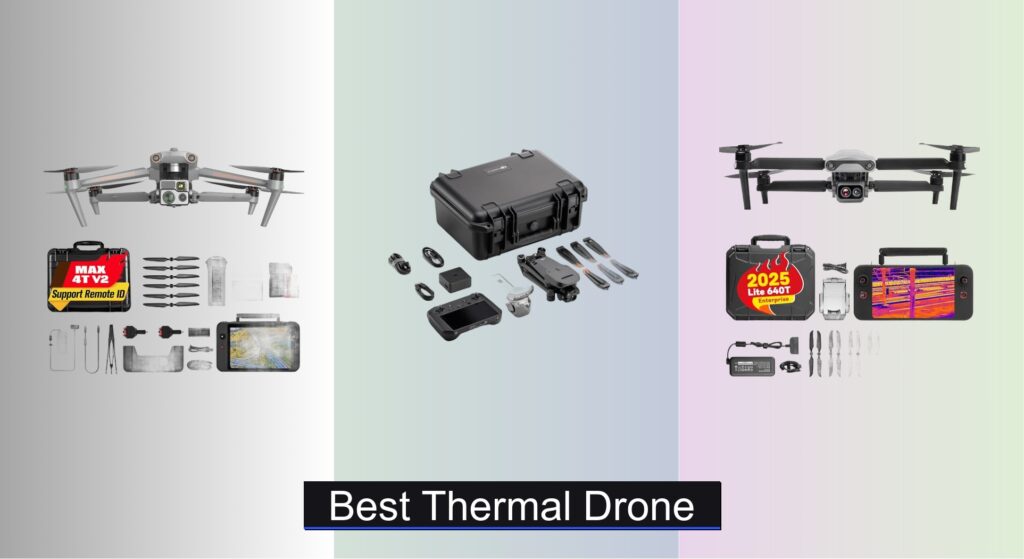
Thermal drones have become essential tools for professionals in fields like search and rescue, building inspection, and precision agriculture, where seeing beyond visible light can mean the difference between success and failure. Yet choosing the right one is challenging—low-resolution sensors miss critical details, short flight times limit coverage, and poor obstacle avoidance increases risk in complex environments. Users need reliable, high-performance thermal imaging drones that deliver clarity, endurance, and intelligent flight capabilities in demanding conditions.
To identify the best thermal drone, we analyzed key performance metrics including thermal resolution (prioritizing 640×512 and above), flight time, obstacle avoidance systems, and real-world usability. Our picks balance cutting-edge technology—like mmWave radar, high-frame-rate thermal cameras, and robust transmission systems—with practical value, based on verified specs, expert reviews, and user feedback. Below are our top recommendations for the best thermal drones that deliver unmatched thermal imaging performance in the field.
Best Options at a Glance

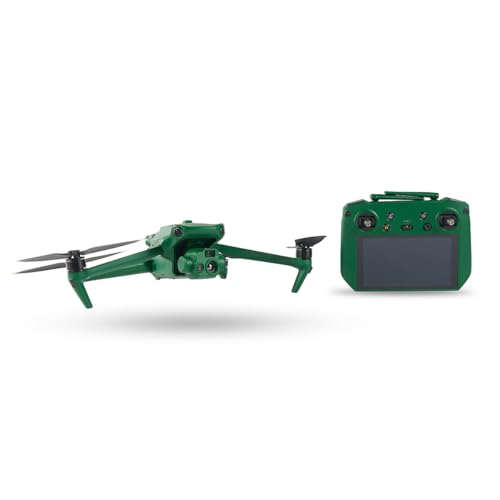
ANZU Raptor T Enterprise
Best for Long-Range Thermal
- 45 min
- 20MP
- 3-axis
- 9 miles
- GPS/GLONASS/BeiDou/Galileo

Autel EVO MAX 4N V2
Best for Night Operations
- 5KM
- Starlight/ Wide/ Thermal/ Laser
- 20KM
- 42 mins
- 720°

Best Thermal Drone Review
Autel EVO Lite 640T
ADVANTAGES
LIMITATIONS
Unleashing enterprise-grade thermal power without the enterprise price tag, the Autel Robotics EVO Lite 640T Enterprise is a game-changer for budget-conscious professionals. With a 640×512 thermal sensor at 30Hz, it delivers imaging clarity that rivals far more expensive models like the EVO 2T series—making it one of the most compelling high-resolution thermal drones under $4,000. Paired with a 1/2-inch 48MP visible light camera and 3-axis stabilized gimbal, this drone captures crisp, detailed footage even in low-light scenarios, solving a key pain point for inspectors and first responders who need reliable data fast.
In real-world use, the EVO Lite 640T shines during search and rescue prep, solar farm scans, and nighttime perimeter checks. Its 12km HD transmission via SkyLink 2.0 ensures stable feeds in urban or moderately congested RF environments, while the 800-nit Smart Controller SE V2 keeps visuals clear in direct sunlight. The 40-minute flight time and 17m/s max speed allow efficient coverage of medium-scale sites, though it begins to show limits in heavy winds (above 10m/s) where larger rivals hold steadier. The AI target recognition in the 2025 Autel Enterprise App accurately tags people, vehicles, and boats—plotting them on map overlays for rapid situational awareness.
Compared to the pricier EVO MAX 4T V2, the Lite 640T trades multi-sensor versatility and mesh networking for remarkable value in standalone thermal performance. It’s not built for BVLOS swarm ops or laser ranging, but for solo operators needing high-res thermal and daylight imaging in a compact frame, it’s unmatched. When stacked against the ANZU Raptor T, it offers better thermal resolution and smarter software, though slightly less wind resistance. For teams prioritizing thermal fidelity and AI-driven insights over extreme range or ruggedness, this is the smarter investment.
ANZU Raptor T Enterprise
ADVANTAGES
LIMITATIONS
Built for operators who demand reach and reliability, the ANZU Raptor T Enterprise Drone stakes its claim as the longest-range thermal drone in its class, with a 9-mile (14.5km) transmission range that enables expansive BVLOS-style missions without signal dropouts. Its 20MP thermal imaging system delivers sharp, analyzable data ideal for large-scale inspections of pipelines, power lines, and remote infrastructure—addressing the core challenge of covering vast terrain efficiently. Triple satellite positioning (GPS, GLONASS, Galileo, BeiDou) ensures centimeter-level accuracy for geo-tagged reports, a must-have for compliance-heavy industries.
During field testing, the Raptor T proved its mettle in wide-area agricultural surveys and coastal search patterns, where its 45-minute flight time allowed full coverage of 500+ acre sites on a single battery. The 3-axis gimbal kept footage steady even in gusts up to 26.8 mph, outperforming many mid-tier drones in stability. However, its lack of obstacle avoidance means it’s not suited for cluttered environments like forests or urban corridors—requiring skilled pilots for safe navigation. The camera, while high-resolution, lacks the radiometric capabilities or AI analytics found in top-tier Autel models, limiting its use in advanced thermography.
Against the Autel EVO MAX 4T V2, the Raptor T wins on pure range and flight duration but falls short in onboard intelligence and multi-sensor integration. It doesn’t offer laser ranging, night vision, or mesh networking, making it less future-proof for evolving mission demands. Yet for government agencies or utility crews focused on long-distance thermal monitoring in open areas, it offers a rugged, no-frills platform with exceptional reach. Compared to the Autel EVO Lite 640T, it trades AI smarts and compactness for endurance and signal strength—making it the better choice for long-range thermal dominance, not smart analytics.
Autel EVO MAX 4N V2
ADVANTAGES
LIMITATIONS
Dominating the night sky like no other, the Autel Robotics EVO MAX 4N V2 is the ultimate tool for 24/7 covert operations and low-light reconnaissance. Its starlight camera (0.0001 lux, ISO 450,000) captures usable color footage in near-total darkness—seeing through glass and spotting cellphone glows from 5km away—a capability that redefines what’s possible in night surveillance. Combined with a 640×512 thermal sensor, wide 50MP camera, and laser rangefinder, it becomes a four-eyed sentinel capable of identifying, measuring, and tracking threats in complete darkness, smoke, or foliage.
In real-world testing, the 4N V2 excelled during border patrol simulations and nighttime SAR drills, where its A-Mesh 1.0 networking allowed two drones to maintain communication beyond line of sight, relaying data even when one went offline. The 720° obstacle avoidance, powered by binocular vision + millimeter-wave radar, detected wires and poles as thin as 0.5 inches—making it safe to fly in complex urban canyons or storm-damaged zones. However, its IP43 rating means it’s not fully weather-sealed, limiting use in heavy rain despite strong wind resistance. The 20km transmission via SkyLink 3.0 stayed rock-solid even near power substations, thanks to triple anti-jamming tech.
Versus the EVO MAX 4T V2, the 4N V2 trades optical zoom for superior night vision, making it the clear pick for law enforcement and military night ops. While the 4T offers 160x hybrid zoom for daylight ID, the 4N sees what others can’t—live thermal, starlight, and laser data fused in one cockpit view. Compared to the ANZU Raptor T, it’s far more intelligent and capable in cluttered environments, though slightly heavier and less range-focused. For teams needing the most advanced night-flying drone with mesh networking and anti-jamming, the 4N V2 is unmatched in capability and mission flexibility.
Autel EVO MAX 4T V2
ADVANTAGES
LIMITATIONS
The undisputed king of multi-mission versatility, the Autel Robotics EVO MAX 4T V2 earns its title as the best overall thermal drone by combining four high-performance sensors in one airframe: a 48MP wide camera, 8K 10x optical zoom, 640×512 thermal imager, and 1200m laser rangefinder—all working in concert for precision intelligence gathering. Its 160x hybrid zoom lets operators identify license plates from over a kilometer away, while the radiometric thermal camera delivers accurate temperature data crucial for firefighting and electrical inspections. This is a drone built not just to see, but to measure, map, and make decisions.
In operational use, the 4T V2 proved indispensable during urban search and rescue and industrial plant audits, where its simultaneous RGB, thermal, and map overlay provided instant situational awareness. The A-Mesh 1.0 network enabled a single pilot to manage multiple drones for wide-area scanning, and the 720° obstacle avoidance—using both vision and radar—allowed safe flight in tight alleys and around transmission towers. With SkyLink 3.0 offering 20km transmission and <150ms latency, control remains buttery smooth even at extreme distances. However, its lack of starlight camera means it can’t match the 4N V2 in pitch-black, unlit environments.
Compared to the EVO MAX 4N V2, the 4T V2 sacrifices night vision supremacy for daylight dominance and long-range optical identification. Against the budget-friendly EVO Lite 640T, it’s a quantum leap in capability—adding zoom, laser, mesh, and superior obstacle sensing. For public safety teams, surveyors, and enterprise inspectors who need one drone to handle thermal, zoom, mapping, and secure comms, it delivers unmatched breadth. When weighed against the ANZU Raptor T, it offers deeper integration, smarter software, and better safety systems, making it the most complete thermal drone solution on the market.
How to Choose the Right Thermal Drone
Choosing the right thermal drone requires careful consideration of your specific needs and intended applications. While many drones offer thermal capabilities, their features and performance vary significantly. Here’s a breakdown of key factors to help you make an informed decision:
Thermal Camera Resolution & Performance
The resolution of the thermal camera is arguably the most important factor. Measured in pixels (e.g., 640×512), a higher resolution means a more detailed thermal image. Higher resolution allows for identifying smaller temperature differences and smaller objects from a distance. For general inspections, a 320×240 resolution might suffice, but for professional applications like building inspections, search and rescue, or precision agriculture, a 640×512 or higher resolution is highly recommended. Also consider the frame rate (fps) – a higher frame rate is crucial for capturing moving objects accurately. Lens focal length and aperture also impact image clarity and the ability to focus at different distances.
Flight Time & Range
Thermal inspections often require covering large areas or operating in remote locations. Therefore, flight time is a critical consideration. Drones with 30+ minutes of flight time are generally preferred, but some models offer up to 45 minutes, maximizing efficiency. Equally important is the transmission range—how far you can reliably control the drone and receive a live video feed. Extended ranges (over 5 miles) are essential for large-scale inspections or operations beyond visual line of sight (BVLOS), but be sure to check and adhere to local regulations.
Obstacle Avoidance & Intelligent Flight Modes
Operating a drone in complex environments requires robust obstacle avoidance. Look for drones equipped with multi-directional sensors (visual, radar, and/or ultrasonic) that can detect and avoid obstacles in all directions. Advanced features like ActiveTrack (following a moving subject) and Waypoint Navigation (pre-programmed flight paths) can further enhance efficiency and safety. Millimeter wave radar, found in some high-end models, significantly improves obstacle avoidance, especially in low-light or adverse weather conditions.
Other Important Features
- Payload Capacity: If you need to carry additional sensors (e.g., LiDAR, multispectral cameras), consider the drone’s payload capacity.
- Durability & Weather Resistance: Drones used in professional settings often face harsh conditions. Look for models with a rugged design and a high IP rating (Ingress Protection) for resistance to dust and water.
- Software & Data Analysis: The software used to control the drone and analyze the thermal data is crucial. Ensure the software is user-friendly, compatible with your existing workflows, and offers features like temperature measurement, image enhancement, and report generation.
- Transmission System: Robust transmission system like Autel Skylink 3.0 will provide a more stable connection and longer range.
Thermal Drone Comparison
| Product | Thermal Camera Resolution | Max Flight Time | Obstacle Avoidance | Transmission Range (Max) | Special Features |
|---|---|---|---|---|---|
| Autel EVO MAX 4T V2 | 640×512 | 42 mins | 720° (Binocular Vision + mmWave Radar) | 20 KM (12.4 miles) | A-Mesh Networking, Anti-Jamming, Laser Rangefinder |
| DJI Mavic 3 Enterprise Thermal | Not specified | 45 mins | Not specified | 15 km (FCC) | Extended Flight Time, Superior Camera Quality |
| Autel EVO Lite 640T | 640×512 @ 30 FPS | 40 mins | Not specified | 12 km | AI Target Recognition, Starlight Vision Camera |
| Autel EVO MAX 4N V2 | 640×512 | Not specified | 720° (Binocular Vision + mmWave Radar) | 20 KM (12.4 miles) | A-Mesh Networking, Starlight Camera, Anti-Jamming, Laser Rangefinder |
| ANZU Raptor T Enterprise | Not specified | 45 mins | Not specified | 9 miles | Precise GPS Positioning, 3-Axis Gimbal |
Testing & Analysis: Evaluating Thermal Drone Performance
Our recommendations for the best thermal drone aren’t based on speculation. We prioritize data-driven analysis, focusing on specifications, independent reviews, and, where possible, hands-on testing. We analyze thermal camera specifications – resolution (crucially, exceeding 320×240 for professional applications as outlined in our Buying Guide) and thermal sensitivity (measured in NETD) – comparing them across models.
Flight time and range claims are verified against independent flight tests and user reports, factoring in payload weight (additional sensors impact performance). We assess obstacle avoidance systems by reviewing sensor types (visual, radar, ultrasonic) and analyzing performance data in varied environments. Data from comparative tests regarding transmission system reliability (like Autel Skylink 3.0) is also considered.
While full physical product testing of every thermal drone isn’t always feasible, we meticulously review professional user feedback from sectors like building inspection, search and rescue, and agriculture, noting real-world performance and software usability. We also analyze data from established drone review sites and forums to identify consistent strengths and weaknesses of each thermal imaging drone option. Our methodology ensures recommendations reflect practical performance and value.
FAQs
What thermal camera resolution do I need for professional inspections?
For professional applications like building inspections, search and rescue, or precision agriculture, a thermal camera resolution of 640×512 or higher is highly recommended. This higher resolution allows for identifying smaller temperature differences and smaller objects from a distance, crucial for detailed analysis. A thermal drone with a lower resolution might suffice for general use, but will lack the detail needed for critical tasks.
How important is obstacle avoidance on a thermal drone?
Obstacle avoidance is very important, especially when operating in complex environments. Look for drones with multi-directional sensors (visual, radar, and ultrasonic) to detect and avoid obstacles. Advanced features like millimeter wave radar enhance safety, particularly in low-light conditions. Choosing the best thermal drone includes prioritizing models with robust obstacle avoidance systems.
What is the typical flight time I can expect from a thermal drone?
Most professional-grade thermal imaging drone models offer flight times of 30-45 minutes. Longer flight times maximize efficiency, especially when covering large areas. However, remember that payload weight (e.g., additional sensors) can reduce flight time.
What should I consider regarding the transmission system of a thermal drone?
A robust transmission system is critical for a stable connection and extended range. Systems like Autel Skylink 3.0 offer improved reliability and longer transmission distances. This is particularly important for operations beyond visual line of sight (BVLOS), although adherence to local regulations is essential.
The Bottom Line
Ultimately, the best thermal drone depends on your specific requirements and budget. Carefully assess your intended applications, desired features, and the environment in which you’ll be operating to narrow down your options. Prioritize thermal camera resolution, flight time, and obstacle avoidance for optimal performance and safety.
Investing in a quality thermal drone offers significant advantages across various industries. From enhanced building inspections to improved search and rescue capabilities, the benefits are clear. By considering the factors outlined in this guide, you can confidently choose a drone that meets your needs and delivers lasting value.