Your drone vanishes over the treetops while you frantically scan the horizon. That sinking feeling hits every pilot who’s pushed range limits too far. Understanding exactly how far can a drone fly isn’t just technical curiosity—it’s the difference between capturing breathtaking aerial footage and losing thousands of dollars in equipment. Most manufacturers advertise “20km range” on boxes, but real-world physics and regulations slash those numbers dramatically. Let’s cut through the marketing hype with actionable data on what actually determines your drone’s maximum distance. You’ll learn why your DJI Mini 4 Pro might only reach 3km in a city, how wind steals 30% of your range, and the legal boundaries that matter more than any spec sheet.
Technical Range vs Legal Range: Why Your Drone Can’t Fly as Far as Advertised
Your drone’s maximum technical range—the distance it can physically travel before battery death or signal loss—bears little resemblance to what you’re legally allowed to fly. Consumer drones like the DJI Air 3 boast 20km capabilities on paper, but these numbers assume perfect conditions: zero wind, no obstacles, and brand-new batteries. In reality, urban environments with Wi-Fi interference and concrete walls can slash that range by 60%. Meanwhile, legal limits tether most pilots to a tiny bubble. Under FAA Part 107 rules, you must maintain Visual Line-of-Sight (VLOS), capping flights at 400-800 meters regardless of your drone’s technical prowess. Europe’s EASA and Transport Canada enforce similar 120-meter altitude and VLOS requirements. Flying beyond these limits without a BVLOS waiver risks $30,000 fines and license revocation—even if your drone’s signal holds strong.
How BVLOS Waivers Actually Work (And Why 95% Get Denied)
Commercial pilots targeting longer missions face brutal regulatory hurdles. To legally fly beyond visual line of sight in the US, you need a Part 107.29 waiver requiring:
– Detect-and-avoid systems that spot aircraft within 5km
– Redundant command links with 99.9% reliability
– Detailed safety cases proving collision avoidance
Fewer than 5% of applications succeed because most operators lack military-grade hardware. Until the FAA’s proposed Part 108 rules (slated for 2025) simplify approvals, VLOS remains your operational ceiling.
Battery Physics Crush Your Drone’s Range Dreams

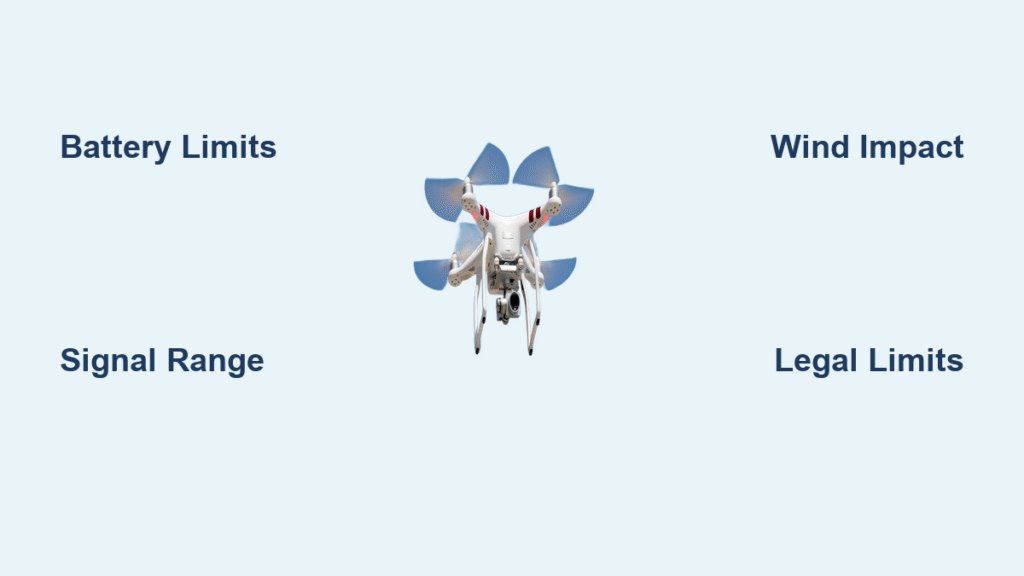
Cold weather below 10°C can vaporize 40% of your battery capacity before takeoff. Every 100g added to a 1kg drone—like extra cameras or protective cages—slashes range by 5-8%. And here’s the brutal truth: your drone’s advertised 34-minute flight time assumes gentle hovering in calm air. Push into sport mode or fight headwinds, and that number plummets to 12 minutes. Smart pilots enforce the 40% battery rule: never use more than 40% of total capacity for the outbound leg. Why? Headwinds on the return journey consume 30% more power, turning a 5km flight into a crash if you push limits.
Why Winter Flights Fail at Half the Expected Range
Li-Po batteries suffer in cold temperatures—internal resistance spikes, reducing usable capacity by up to 40%. Pre-flight battery warming solves this:
1. Store batteries indoors until 5 minutes before flight
2. Check individual cell voltages (variance >0.1V means replace)
3. Take off only when battery surface reads above 20°C
Desert heat brings different problems: cells degrade 20% faster above 40°C, though denser air marginally improves propeller efficiency.
Radio Signal Breakdown: Why Your Controller Loses Connection
Wi-Fi drones (like most toys) die at 100 meters in cities due to signal interference. DJI’s OcuSync 3.0 pushes consumer drones to 15km—if you avoid obstacles. But concrete walls attenuate 2.4GHz signals by 20dB per wall, while dense forests eat 1dB per meter at 5.8GHz. The antenna orientation secret? Vertical polarization gives 6dB gain over horizontal when aligned properly. Tilt your controller antenna 90 degrees sideways, and signal strength drops 90% instantly. Professional surveyors bypass this with 900MHz telemetry systems and high-gain Yagi antennas, extending reliable control to 40km in open terrain.
Urban Flight Range Killers You Can’t Ignore
City environments create invisible range barriers:
– High-voltage power lines generate electromagnetic noise that forces transmission systems to reduce data rates
– Skyscrapers cause multipath interference, where signals bounce and cancel each other
– Crowded Wi-Fi channels (especially in 2.4GHz band) force drones to “throttle down” transmission power
Always switch to 5.8GHz in cities—it travels shorter distances but handles interference better.
Wind and Weather: The Silent Range Thieves
A 10 m/s (22 mph) headwind increases power consumption by 30% while crawling forward at half speed. Pilots flying fixed routes make a critical mistake: flying straight out against the wind. Instead, always plan downwind outbound legs and accept slower headwind returns when batteries are fuller. Altitude also steals range—every 100 meters gained reduces air density by 1%, cutting propeller thrust proportionally. Mountain flyers lose 10% range at 1,000m elevation without adjusting flight plans.
Real-World Drone Range by Category

Toy drones (Holy Stone HS210) manage 50-100 meters—barely across a backyard. Consumer prosumer drones like the DJI Mini 4 Pro claim 20km range but realistically achieve 3-8km in mixed environments. Commercial workhorses (DJI Matrice 350 RTK) deliver 15km range with 55-minute flights but require BVLOS waivers for legal operation. Fixed-wing survey drones like the JOUAV CW-30E achieve 200km+ ranges, but operate under entirely different regulatory frameworks.
Critical Range Comparison Table
| Drone Type | Realistic Range | Flight Time | Legal Limit |
|---|---|---|---|
| Toy Drones | 50-100m | 5-10 min | 400m |
| Consumer (DJI Mini 4 Pro) | 3-8km | 20-34 min | 800m |
| Commercial (Matrice 350) | 8-15km | 30-55 min | BVLOS waiver required |
| Fixed-Wing Survey | 55-200km | 54-480 min | BVLOS waiver required |
Safety Protocols for Pushing Range Limits
Before attempting long flights, complete this 5-point checklist:
1. Battery health: Verify <0.1V cell voltage variance and ≥3 full charge cycles
2. RTH altitude: Set 30+ meters above tallest obstacle along your route
3. Emergency zones: Plot landing spots every 2km via your flight app
4. Weather thresholds: Abort if winds exceed 20mph or visibility drops below 3 miles
5. Signal redundancy: Enable LTE backup if your drone supports it (e.g., Freefly Astro)
How to Safely Extend Your Drone’s Range
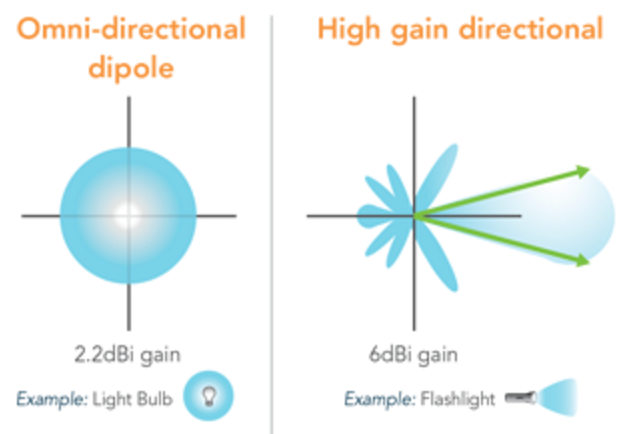
Antenna upgrades deliver immediate gains—replace stock controller antennas with circular-polarized 9dBi patches. Pair with 5dBi omni antennas on the drone to double effective range. Battery swaps using high-density Li-ion cells (300 Wh/kg) add 15-25% flight time but require thermal management below 10°C. For critical missions, deploy portable 2W 900MHz repeaters every 5-8km where regulations permit. Crucially, optimize cruise speed—fly at 70% of max horizontal velocity for best energy efficiency.
What Happens When You Exceed Range Limits
Signal loss triggers three distinct failure modes:
– RTH-capable drones (most DJI models) ascend to preset altitude and navigate home via GPS—if GPS lock remains strong
– Non-RTH drones hover until battery depletion, then auto-land at current location
– Battery exhaustion mid-flight causes uncontrolled descent, often into terrain you didn’t map
Prevent disasters by setting low-battery RTH triggers at 25% and maintaining 35% reserve minimum. GPS-denied environments (canyons, dense forests) present worst-case scenarios—without satellite lock, even advanced drones drift unpredictably.
Key Takeaways for Every Drone Pilot
Your drone’s advertised range is a laboratory fantasy. Real-world conditions typically deliver 30-50% of manufacturer claims. The harsh truth? Legal VLOS limits (400-800 meters) constrain 99% of pilots more than battery or signal limitations. Until BVLOS regulations evolve, treat technical range as engineering trivia—not an operational target. Always prioritize safe return over distance records: enforce the 40% battery rule, pre-plan emergency landings, and respect weather thresholds. The most effective range extender isn’t hardware—it’s meticulous planning that respects both physics and regulations. Push boundaries wisely, and your drone will keep coming home.